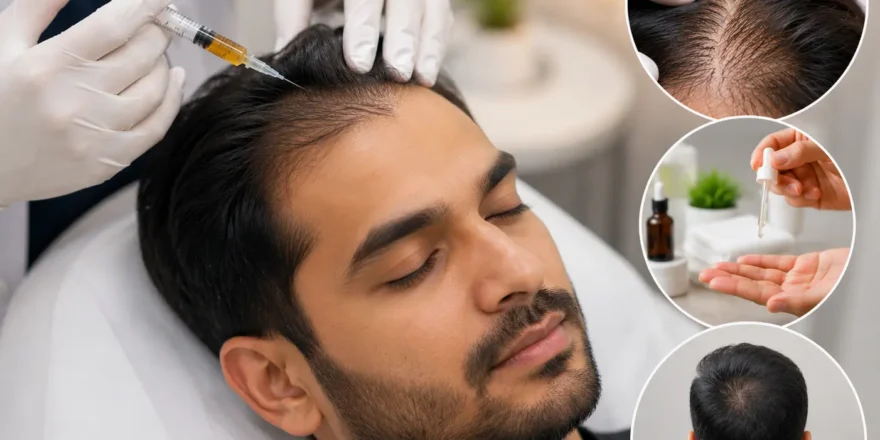
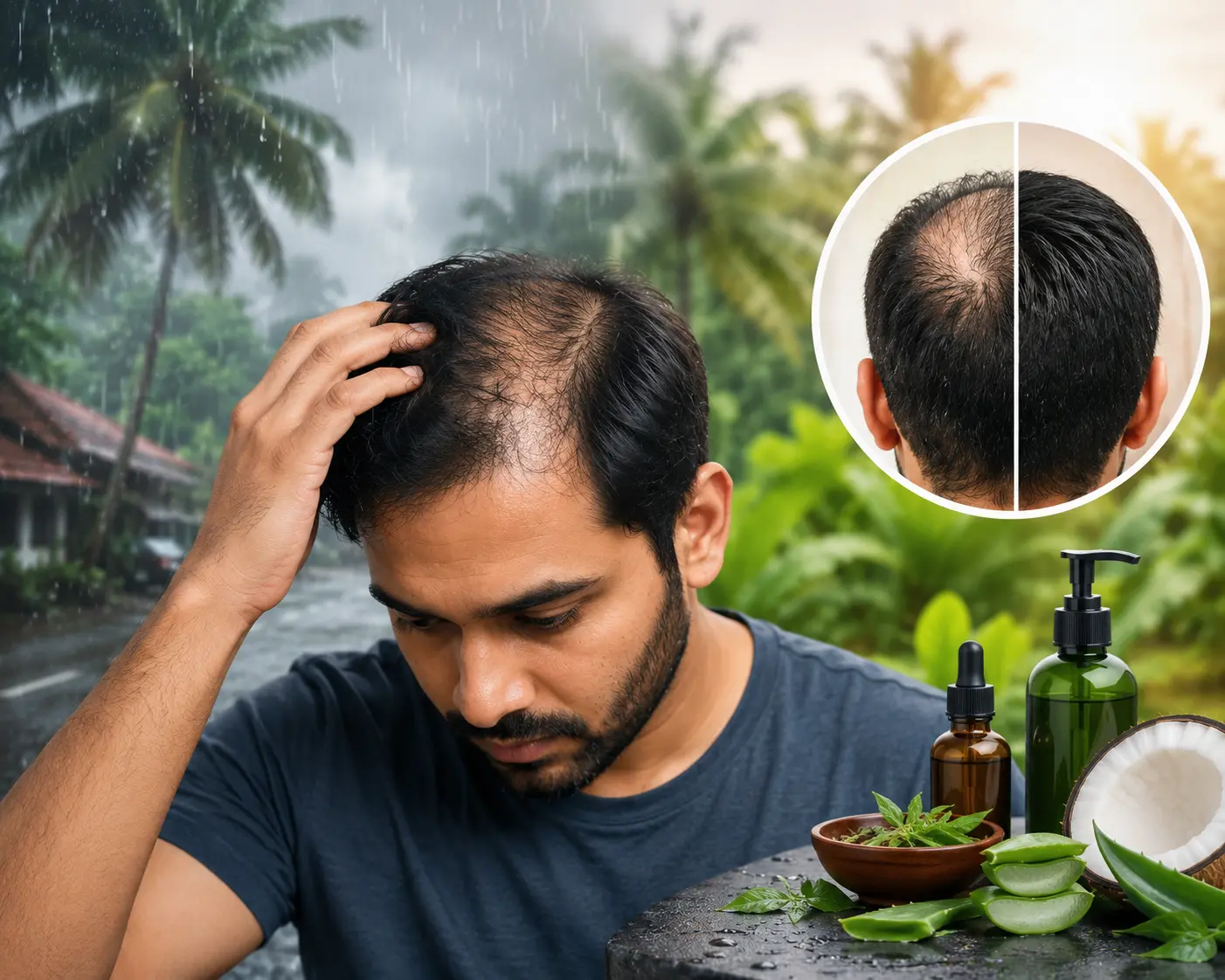
If you’ve noticed more hair on your pillow, your comb, or the shower drain lately, you’re not imagining it. Kerala’s warm, humid, monsoon-heavy climate creates the perfect storm for hair fall — and if genetics are already working against you, the weather can speed things up considerably. In this guide, we’ll break down why hair loss hits differently in Kerala, what’s actually happening to your scalp, and when it’s time to consult a specialist for the best hair transplant in Malappuram.
At Neoskin Speciality Center, Perinthalmanna, we see this pattern every day in our clinic — patients who assumed their hair fall was “just weather” until it turned out to be early-stage androgenetic alopecia (the medical term for male pattern baldness) accelerated by environmental stress.
What Is Male Pattern Baldness, Really?
Male pattern baldness, medically known as androgenetic alopecia, is a genetically driven, progressive condition. According to Cleveland Clinic, it causes hair loss on the scalp that typically doesn’t grow back on its own, usually starting with a receding hairline and thinning at the crown before progressing further.
The Mayo Clinic Proceedings notes that androgenetic alopecia affects at least half of men by age 50, and its progression is driven by the hormone dihydrotestosterone (DHT) acting on genetically sensitive hair follicles. In simple terms: if your father or grandfather went bald in a certain pattern, you carry a higher genetic risk of the same outcome.
This condition is not caused by Kerala’s weather — but the climate can absolutely make it worse, faster.
Why Kerala’s Climate Makes Hair Fall Worse
Kerala’s tropical, humid climate — especially in monsoon-heavy districts like Malappuram — creates scalp conditions that accelerate hair thinning in people who are already genetically predisposed. Here’s how:
1. High Humidity Fuels Fungal Overgrowth (Malassezia)
Warm, moist environments are ideal breeding grounds for Malassezia, a yeast-like fungus naturally present on the scalp. Research summarized by DrOracle explains that elevated humidity above 50% — common across Kerala for much of the year — provides optimal conditions for this fungus to multiply, directly increasing dandruff and scalp inflammation.
2. Excess Sweat and Sebum Clog Follicles
Constant heat means constant sweating. Sweat mixing with natural scalp oil (sebum) clogs hair follicles, and over time this buildup can weaken hair roots and increase shedding — a pattern explained in dermatology write-ups on humid-climate scalp health.
3. Monsoon Moisture Weakens Hair Structure
During Kerala’s long monsoon season, persistently damp hair and scalp conditions can alter the scalp’s natural pH balance. Combined with clogged follicles, this stresses hair roots and accelerates breakage and shedding — effects that are especially noticeable in people who already have thinning hair from genetic pattern baldness.
4. Hard Water and Local Water Quality
Many parts of Malappuram and surrounding districts rely on borewell or municipal water with high mineral content. Mineral buildup on the scalp and hair shaft is a known contributor to dullness, dandruff, and weakened strands, compounding fall that’s already happening due to androgenetic alopecia.
5. Oil Overuse — A Kerala-Specific Habit
Traditional daily hair-oiling is deeply rooted in Kerala’s culture, and while oiling has real benefits, heavy oil application in a humid climate can trap moisture and sweat against the scalp, encouraging fungal growth rather than preventing it — particularly if oils aren’t washed out thoroughly.
Genetics + Climate: A Compounding Effect
It’s important to understand that Kerala’s weather doesn’t cause male pattern baldness — but it does act as an accelerant. A person with a strong genetic predisposition to hair loss who lives in a hot, humid coastal district will often notice thinning earlier and more visibly than someone with the same genetics living in a cooler, drier climate. This is why hair fall complaints tend to spike in Kerala clinics during and right after monsoon season.
Solutions: Managing Hair Loss in Kerala’s Climate
Scalp Hygiene Adjustments
- Wash hair regularly with a mild, anti-fungal or anti-dandruff shampoo (containing ketoconazole or zinc pyrithione) to control Malassezia overgrowth.
- Avoid tying up wet hair — trapped moisture is one of the biggest drivers of fungal scalp issues in humid climates.
- Reduce heavy oil application; if you oil your hair, wash it out within a few hours rather than leaving it overnight during humid months.
Medical & Clinical Interventions
For hair loss that’s genetic rather than purely environmental, hygiene changes alone won’t reverse it. Options that have clinical backing include:
- Topical minoxidil — slows progression and stimulates regrowth in early-stage cases.
- Oral finasteride — reduces DHT levels, the hormone directly responsible for follicle miniaturization (to be used only under medical supervision).
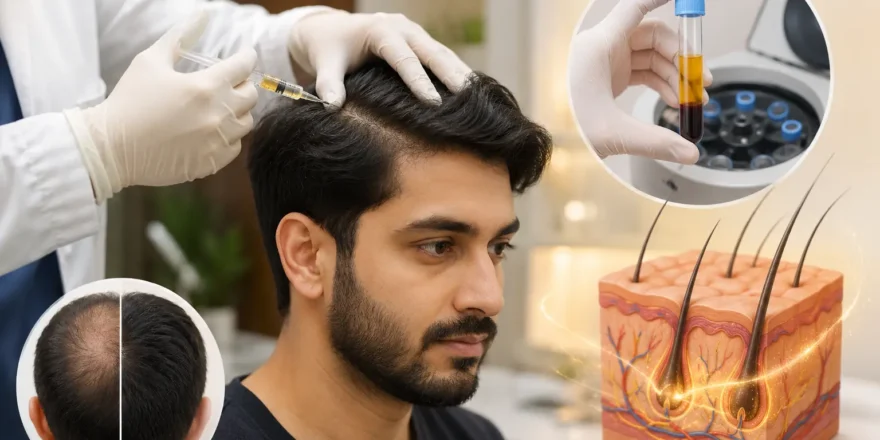
- PRP (Platelet-Rich Plasma) therapy — can strengthen existing follicles in early to moderate hair loss.
- Hair transplant surgery — the only permanent solution once follicles have significantly miniaturized or stopped producing hair altogether.
When to See a Specialist
If you’re noticing a receding hairline, visible scalp at the crown, or hair fall that persists despite good hygiene, it’s time for a professional evaluation rather than guesswork with home remedies. Early diagnosis gives you far more treatment options — including non-surgical ones — than waiting until hair loss is advanced.
Why Choose Neoskin Speciality Center
At Neoskin Speciality Center, Perinthalmanna, our dermatology team specializes in diagnosing the exact cause of hair fall — genetic, climate-driven, nutritional, or a combination — before recommending treatment. For patients whose hair loss has progressed to the point where medical therapy alone won’t restore density, we offer advanced, minimally invasive hair transplant procedures tailored to Kerala’s climate and hair type.
If you’re searching for the best hair transplant in Malappuram, our clinic combines dermatologist-led diagnosis, modern FUE/FUT techniques, and aftercare protocols specifically designed for humid coastal conditions — because a transplant plan that ignores local climate factors won’t hold up long-term.