If you’ve been researching non-surgical hair loss treatments, you’ve likely come across two similar-sounding acronyms: PRP and GFC. While PRP (Platelet-Rich Plasma) is the more widely known name, GFC — Growth Factor Concentrate — is a newer, more refined evolution of the same idea, and it’s fast becoming one of the most requested treatments for people searching for the best GFC treatment in Malappuram.
In this guide, we’ll break down exactly what GFC is, how it works at a biological level, and why it’s often considered a step ahead of traditional PRP for hair restoration — including how we approach it at Neoskin Speciality Center, Perinthalmanna.
What Is GFC Treatment?
GFC stands for Growth Factor Concentrate — a non-surgical hair loss treatment that uses the patient’s own blood platelets, similar to PRP, but processed into a more potent, purified concentration. According to iCliniq, GFC is essentially a more advanced version of PRP, where high-concentration growth factors are extracted from platelets and injected directly into the scalp in place of whole platelets.
Put simply: PRP delivers a concentration of platelets themselves into the scalp, while GFC isolates and concentrates just the active growth factors those platelets contain — which is why many clinics and specialists describe it as a more targeted and often more comfortable version of the same underlying science.
How Does GFC Work? The Science Explained
Blood platelets are essentially storehouses of natural growth factors — proteins that direct the body’s own cell growth, tissue repair, and regeneration processes. DHI India explains that several distinct growth factors are extracted and concentrated during GFC preparation, each playing a specific role in reversing hair thinning:
- Platelet-Derived Growth Factor (PDGF) — stimulates vascularization and angiogenesis (new blood vessel formation), which improves blood supply to hair follicles.
- Insulin-like Growth Factor-1 (IGF-1) — supports overall hair follicle growth and helps maintain the growth phase of the hair cycle.
- Vascular Endothelial Growth Factor (VEGF) and Epidermal Growth Factor (EGF) — further support tissue regeneration and follicle health.
The GFC Procedure, Step by Step
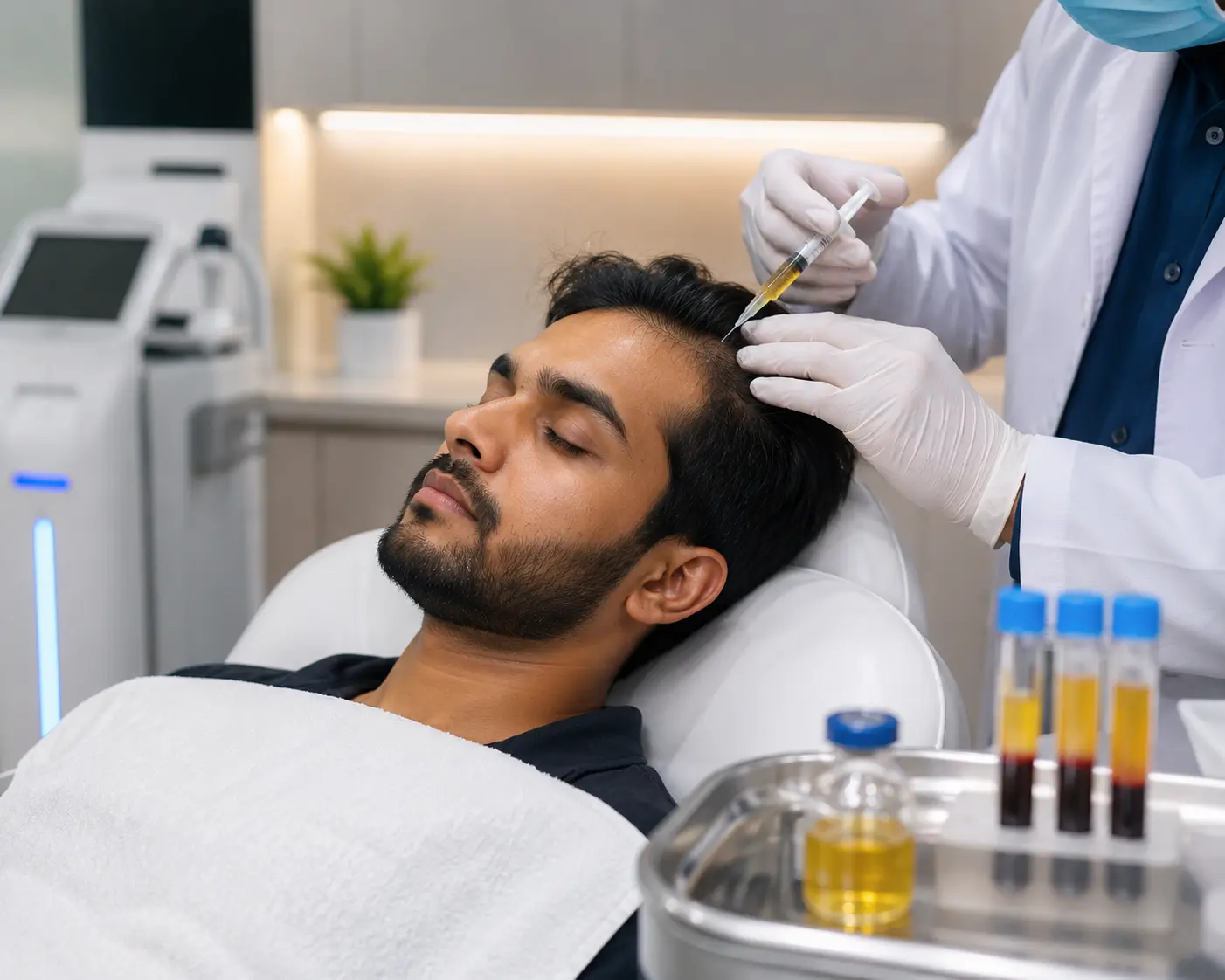
- Blood collection — A small sample of the patient’s blood is drawn, similar to a routine blood test.
- Processing & concentration — The blood is processed using a specialized kit and centrifuged at high speed to separate and concentrate the growth factors from red and white blood cells, as detailed by DHI India.
- Activation — The concentrated growth factors are activated using a specific process that triggers their release, making them ready to stimulate tissue once injected, according to Dr. Batul’s Clinic.
- Injection — The activated GFC serum is injected directly into the scalp, targeting areas of thinning or hair loss using fine needles.
- Post-treatment care — Mild swelling, redness, or bruising around injection sites is common and usually resolves within a few days, with your provider giving specific aftercare instructions.
Most protocols involve 3 to 4 sessions, typically spaced 2–4 weeks apart, followed by maintenance sessions every 6–12 months to sustain results — a treatment cadence confirmed across multiple hair restoration clinics, including QHT Clinic.
GFC vs PRP: What’s the Real Difference?
Since both treatments come from the same biological source (the patient’s own blood), the distinction often confuses first-time patients. The key differences:
| Factor | PRP | GFC |
|---|---|---|
| What’s injected | Concentrated platelets in plasma | Isolated, concentrated growth factors only |
| Processing | Single centrifugation | More refined multi-step concentration |
| Comfort | Mild discomfort | Often described as more comfortable/painless |
| Potency | Standard | Higher concentration of active growth factors |
Some clinics describe GFC as a more refined and effective alternative to traditional PRP, citing a more concentrated formulation as the reason for improved outcomes. That said, both treatments work on the same underlying principle — stimulating dormant or weakening follicles using the body’s own regenerative signals.
Who Is GFC Treatment For?
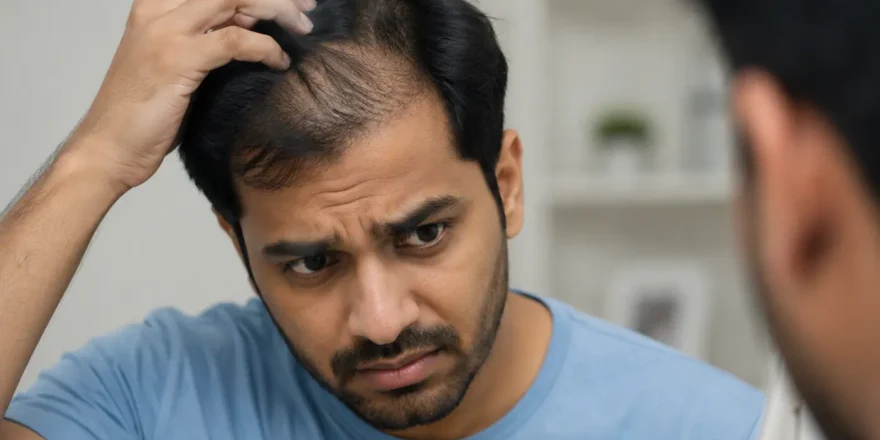
GFC is particularly effective for people experiencing hair thinning due to androgenetic alopecia (male or female pattern baldness), where genetic and hormonal factors — specifically the conversion of testosterone into DHT — gradually weaken hair follicles over time, as outlined in a study published on NCBI/PubMed Central. It has also shown effectiveness for other forms of hair loss, including alopecia areata.
Good candidates typically include those who:
- Are in the early-to-moderate stages of hair thinning (follicles are weakened, not fully dormant)
- Want a non-surgical option before considering a hair transplant
- Are looking to strengthen and thicken existing hair rather than replace lost follicles entirely
- Have realistic expectations about gradual, multi-session results rather than an instant fix
A proper scalp evaluation is essential to confirm candidacy, since GFC works best when there’s still follicular activity to stimulate.
Why GFC Is Gaining Popularity Over Traditional PRP
Compared to conventional treatment options, growth factor-based therapy is often described as offering a less invasive and safer alternative with fewer side effects than more aggressive interventions. Since the entire process is non-pyrogenic (doesn’t trigger fever/inflammatory response) and derived from the patient’s own body, the safety profile is considered excellent, with no meaningful risk of allergic reaction to the injected material itself.
Why Choose Neoskin Speciality Center for GFC Treatment
At Neoskin Speciality Center , Perinthalmanna, our dermatology-led team evaluates each patient’s hair loss pattern and stage before recommending GFC, PRP, or a combination approach — because the “best” treatment always depends on individual scalp condition, not a one-size-fits-all protocol. If you’re comparing options and searching for the best GFC treatment in Malappuram, our clinic offers:
- Dermatologist-supervised evaluation and treatment planning
- Sterile, standardized GFC processing kits for consistent, high-quality concentration
- A session and aftercare plan adapted for Kerala’s humid climate, which can otherwise affect scalp healing
- Transparent guidance on realistic timelines and expected results
Frequently Asked Questions
Is GFC better than PRP for hair loss? Both use the body’s own blood-derived growth factors, but GFC involves a more refined concentration process, which many clinics report leads to greater comfort and potency. The right choice depends on your specific hair loss stage — a specialist consultation can determine which is better suited to you.
How many GFC sessions will I need? Most patients need 3 to 4 initial sessions spaced a few weeks apart, followed by maintenance sessions roughly every 6 to 12 months.
Is GFC treatment painful? GFC is generally described as more comfortable than traditional PRP, since the concentrated growth-factor serum (rather than whole platelets) is injected using fine needles, often with topical numbing beforehand.
Can GFC treatment be combined with other hair loss treatments? Yes — GFC is often used alongside minoxidil, microneedling, or as a supportive treatment following a hair transplant to improve overall follicle health.
Is GFC treatment permanent? GFC doesn’t replace or reverse advanced hair loss where follicles are already dormant. It works best as an ongoing treatment for hair thinning where follicles are still viable, with maintenance sessions needed to sustain results over time.