Hair loss is one of the most common concerns people bring to a dermatologist or trichologist — and one of the most misunderstood. Many assume hair fall is simply “genetic” and unavoidable, while others blame shampoos, stress, or diet without understanding the real underlying cause. At Neoskin Speciality Center, we believe informed patients make better decisions about their hair health. This blog breaks down exactly what causes hair loss in men and women, and how pattern baldness differs from other forms of hair thinning.
Understanding Normal Hair Fall vs. Hair Loss
It’s normal to shed 50–100 hairs a day as part of your hair’s natural growth cycle. Hair loss becomes a concern when shedding exceeds this range consistently, when you notice visible thinning, a receding hairline, or widening partition, or when new hair isn’t growing back to replace what’s shed.
If you’re noticing any of these signs, it’s worth understanding the cause before choosing a treatment.
What Is Pattern Baldness?
Pattern baldness — medically known as androgenetic alopecia — is the most common cause of hair loss worldwide, affecting both men and women. It is largely driven by genetics and hormones, and unlike temporary hair fall, it follows a progressive, predictable pattern over time.
Male Pattern Baldness (MPB)
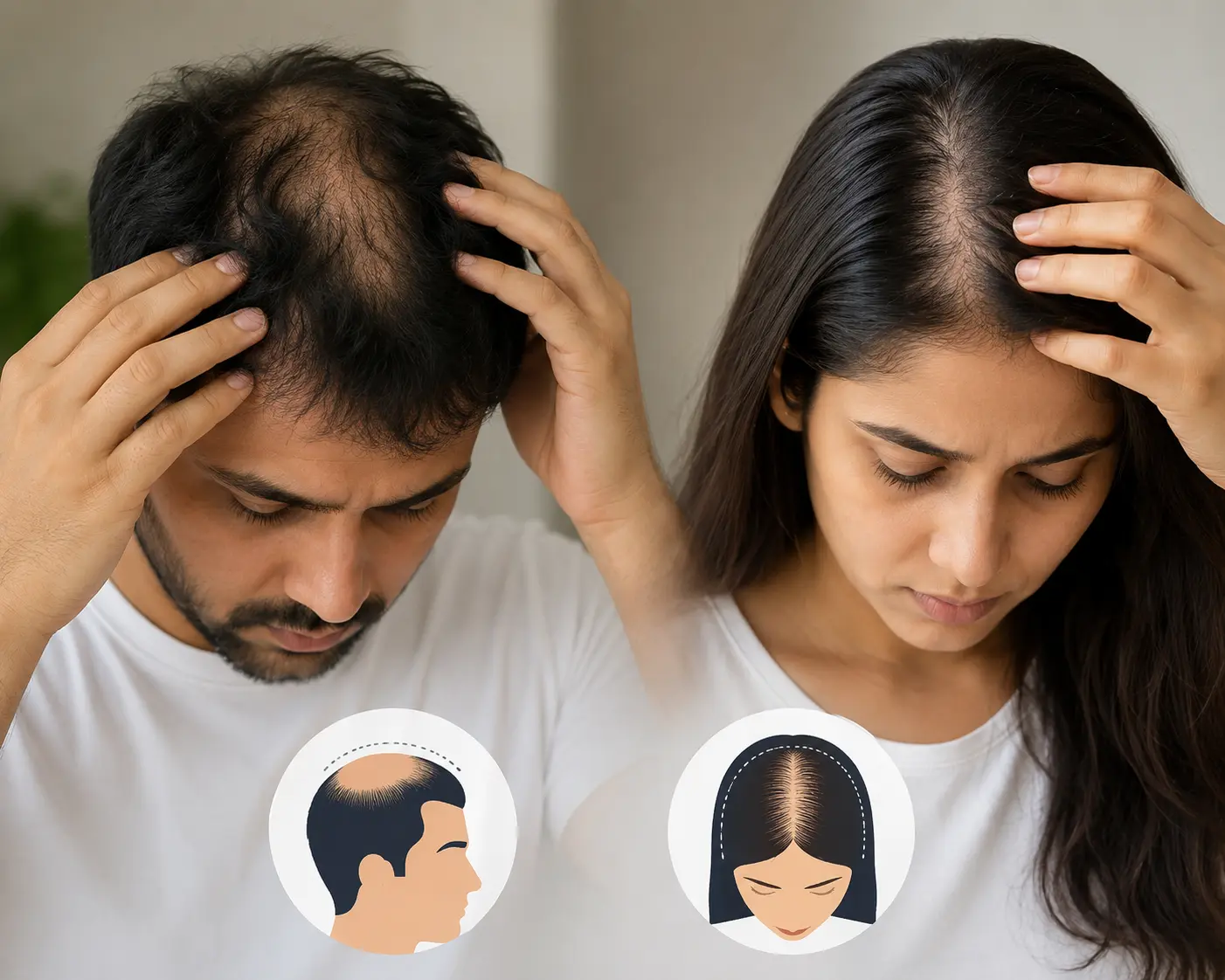
Male pattern baldness typically follows a well-documented progression:
- Receding hairline at the temples, forming an “M” shape
- Thinning crown, which gradually expands
- Eventual merging of the receding hairline and thinning crown, leaving a horseshoe pattern of hair around the sides and back
Main causes:
- Genetics (hereditary factor) – If your father or maternal grandfather experienced baldness, you have a higher likelihood of developing it too.
- DHT sensitivity – Hair follicles in genetically predisposed men are sensitive to dihydrotestosterone (DHT), a byproduct of testosterone. DHT binds to receptors in the follicles, causing them to shrink (miniaturize) over time until they stop producing visible hair.
- Age – MPB can begin as early as the late teens or early 20s and becomes more prevalent with age.
Female Pattern Baldness (FPB)
Female pattern hair loss looks different from the male pattern. Instead of a receding hairline, women typically experience:
- Diffuse thinning across the top of the scalp
- Widening of the central hair partition
- Overall reduced hair volume and density, without a fully bald patch in most cases
Main causes:
- Genetics – Similar hereditary links exist, though the pattern of expression differs due to hormonal differences.
- Hormonal changes – Hair thinning is common during menopause, pregnancy, postpartum periods, and with conditions like PCOS, where hormonal fluctuations affect the hair growth cycle.
- Androgens – While women have lower androgen levels than men, sensitivity to these hormones can still trigger follicle miniaturization.
- Age – FPB often becomes more noticeable after age 40, though it can start earlier.
Other Common Causes of Hair Loss (Beyond Pattern Baldness)
Not all hair loss is pattern baldness. Other contributing factors include:
- Telogen effluvium – Temporary hair shedding triggered by stress, illness, surgery, or childbirth
- Nutritional deficiencies – Low iron, vitamin D, zinc, or protein intake can weaken hair growth
- Thyroid disorders – Both hypothyroidism and hyperthyroidism can cause diffuse hair thinning
- Autoimmune conditions – Such as alopecia areata, which causes patchy hair loss
- Medications – Certain drugs (chemotherapy, blood thinners, some antidepressants) can cause hair shedding
- Harsh hair care practices – Excessive heat styling, tight hairstyles, and chemical treatments can cause traction alopecia or damage over time
Why Getting an Accurate Diagnosis Matters
Because pattern baldness and other causes of hair loss can look similar in early stages, self-diagnosis often leads to the wrong treatment approach. A dermatologist or trichologist can differentiate between causes using scalp examination, medical history, and sometimes blood tests or trichoscopy, ensuring you start the right treatment early — when it’s most effective.
Hair loss isn’t one-size-fits-all, and neither is the solution. Understanding whether you’re dealing with male or female pattern baldness — or another underlying cause entirely — is the first step toward effective treatment. At Neoskin Speciality Center, our specialists assess your hair loss pattern, medical history, and scalp health to recommend a treatment plan tailored specifically to you.