If you’ve been going through a stretch of work pressure, poor sleep, or a major life event, and suddenly noticed clumps of hair in the shower or on your pillow, you’re not imagining a connection — you’re experiencing a well-documented biological process. Stress-induced hair loss is one of the most common (and most treatable) causes we evaluate in patients searching for hair fall treatment in Malappuram.
In this blog, we’ll explain exactly how cortisol — your body’s primary stress hormone — disrupts the natural hair growth cycle, why the hair loss often shows up months after the stressful period has passed, and what can actually be done about it. This is also the framework our team uses at Neoskin Speciality Center Perinthalmanna, when evaluating patients for stress-related shedding.
Understanding the Normal Hair Growth Cycle First
To understand what stress disrupts, it helps to know how healthy hair growth normally works. According to Cleveland Clinic, each hair follicle cycles through three distinct phases:
- Anagen (growth phase) — the active growth stage, lasting up to four years, during which around 80–90% of your hair follicles are typically in progress at any given time.
- Catagen (transition phase) — a short regression phase where the follicle’s lower portion shrinks and growth stops.
- Telogen (resting/shedding phase) — the hair follicle becomes inactive and the hair eventually sheds, making way for a new growth cycle to begin. Normally, only around 5% of hairs are in this resting stage at once.
This system works like a rotating schedule — different follicles are at different stages simultaneously, which is why healthy hair loss (50–100 strands a day) goes largely unnoticed. Stress disrupts this careful rotation.
How Stress and Cortisol Disrupt the Hair Cycle
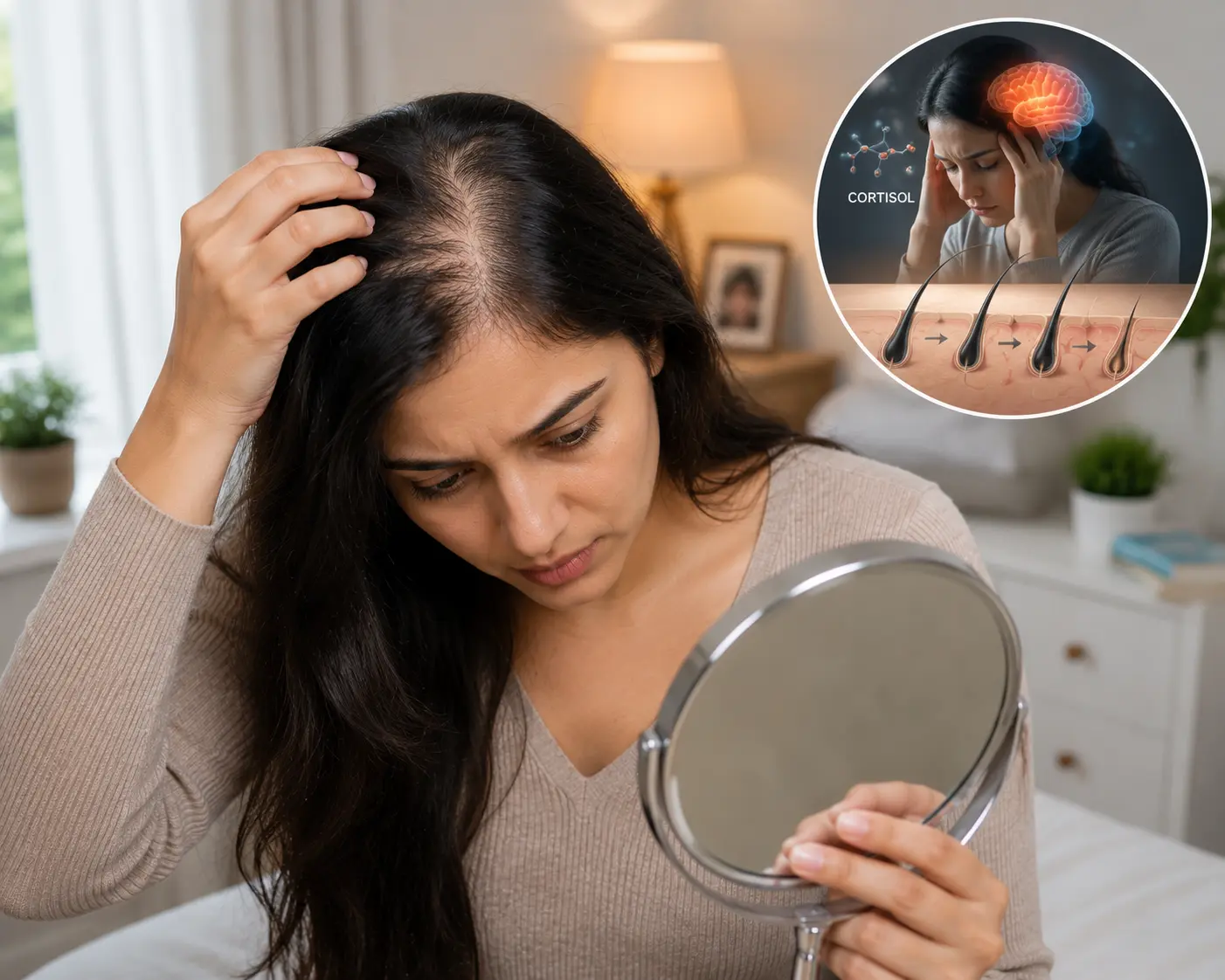
When you’re under chronic stress, your body activates the hypothalamic-pituitary-adrenal (HPA) axis — the same system responsible for your “fight or flight” response. This triggers a sustained rise in cortisol and related stress hormones. Research summarized by Hair GP explains that when cortisol levels surge due to chronic stress, this hormone disrupts normal follicle functioning, forcing an unusually large number of hairs out of the growth phase and into the resting phase all at once.
This condition has a clinical name: telogen effluvium. As explained by NCBI’s StatPearls, telogen effluvium occurs when physiological or psychological stress causes a large number of anagen (growing) hairs to abruptly shift into the telogen (resting) phase — and in significant stress events, as much as 70% of actively growing hair can be affected at once, compared to the normal 15%.
The Biology Behind It — Why Cortisol Specifically Matters
Recent research has clarified why cortisol has this effect at a cellular level. A widely cited Harvard study found that elevated cortisol blocks a signaling molecule called GAS6 from being released by the dermal papilla — the structure at the base of the hair follicle responsible for activating hair follicle stem cells, as reported by MDhair. Without this signal, follicles get stuck in the resting phase instead of cycling back into active growth.
Cortisol doesn’t stop there — the same research indicates it can also reduce production of hyaluronan and proteoglycans (structural components) around the follicle by a significant margin, weakening the scalp environment hair needs in order to grow well.
Beyond cortisol itself, chronic stress also elevates inflammatory messengers such as certain cytokines and neuropeptides that further disrupt healthy follicle function, according to a review referenced by Shapiro Medical.
Why the Hair Fall Shows Up Months Later
One of the most confusing aspects of stress-related hair loss is the delay. Because a hair follicle typically spends around three to four months in the resting phase before it’s shed and replaced, Cleveland Clinic notes that hair loss related to a stressor tends to appear roughly two to three months after the triggering event — which is exactly why so many people don’t immediately connect their shedding to the stressful period that caused it.
This delayed pattern is what makes stress-related hair fall easy to misdiagnose, especially if the original stressor (a job change, illness, surgery, or major life event) has already resolved by the time the shedding becomes noticeable.
Common Triggers Beyond “Just Being Stressed”
Telogen effluvium isn’t limited to emotional or psychological stress alone. According to a literature review published on NCBI, several types of physiological stress can trigger the same hair cycle disruption, including:
- Surgical procedures or physical trauma
- High fever or acute illness
- Childbirth (a specific form known as postpartum telogen effluvium, occurring roughly three months after delivery)
- Thyroid dysfunction (both hyper- and hypothyroidism)
- Chronic systemic conditions affecting overall metabolic health
This is why a proper clinical evaluation matters — what looks like “just stress” on the surface may have an underlying hormonal or medical trigger that also needs addressing.
The Self-Reinforcing Cycle: When Hair Loss Itself Becomes a Stressor
Here’s a detail most general hair-care content misses: the relationship between stress and hair loss can become circular. Watching your hair fall out is, understandably, itself a source of significant psychological stress — which can prolong or intensify the very hormonal cascade causing the shedding in the first place. Recognizing this pattern early and seeking proper treatment (rather than anxiously monitoring hair loss day to day) is an important part of breaking the cycle.
Is Stress-Related Hair Fall Permanent?
In most cases, no. Acute telogen effluvium typically resolves within six months once the underlying stressor is addressed, and in the large majority of cases, hair regrowth follows naturally once cortisol levels normalize. However, if elevated stress is ongoing or the shedding continues beyond six months, it’s classified as chronic telogen effluvium and generally requires a more structured evaluation and treatment plan.
What Actually Helps: Evidence-Based Approaches
- Address the root stressor where possible — this is the most direct way to normalize cortisol and allow follicles to re-enter the growth phase.
- Rule out underlying medical causes — thyroid panels and basic bloodwork can identify whether a hormonal or nutritional factor is compounding the stress-related shedding.
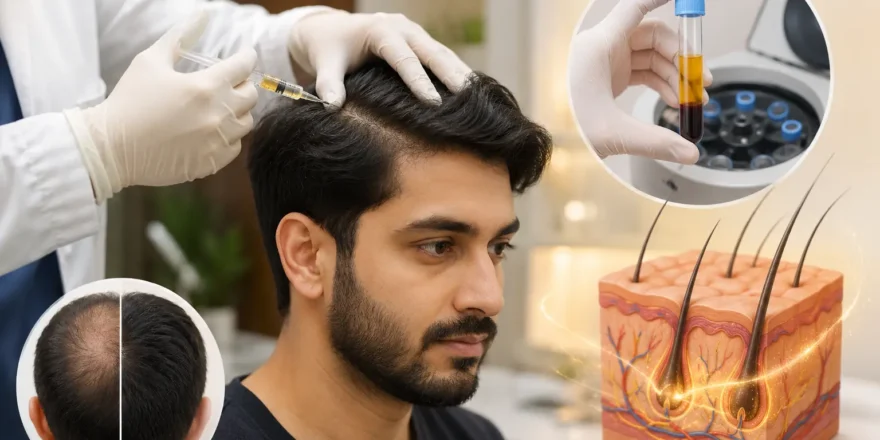
- Clinical hair treatments — for patients whose shedding is prolonged or where follicle health has been significantly affected, targeted treatments such as PRP or GFC therapy can help stimulate follicles back into active growth by delivering concentrated growth factors directly to the scalp.
- Be cautious with unproven “cortisol-blocker” products — most adaptogen blends and supplement-based “cortisol detox” products marketed for hair loss lack meaningful clinical backing; a small number of ingredients like ashwagandha have modest supporting evidence for stress reduction, but they are not a substitute for an actual diagnosis.
Why a Proper Diagnosis Matters Before Treatment
Because stress-related shedding, thyroid-related hair loss, and androgenetic alopecia can all present similarly at first glance, self-treating based on guesswork often delays effective care. A trichoscopic scalp examination combined with relevant bloodwork is the most reliable way to confirm whether your hair fall is primarily stress-driven, hormonal, or a combination of factors.
How Neoskin Speciality Center Approaches Stress-Related Hair Fall
At Neoskin Speciality Center Perinthalmanna, we don’t treat hair fall with a one-size-fits-all shampoo recommendation. Our evaluation process for patients experiencing sudden or diffuse shedding includes a detailed history (to identify potential stress or physiological triggers), scalp examination, and relevant bloodwork where needed — because effective hair fall treatment in Malappuram starts with an accurate diagnosis, not assumptions.
Depending on what we find, treatment may involve simple lifestyle and monitoring guidance for straightforward stress-related shedding, or more targeted interventions like PRP or GFC therapy for patients whose follicles need additional support to resume normal, healthy growth.
Frequently Asked Questions
How much hair loss from stress is considered normal vs concerning? Telogen effluvium typically causes shedding of 150–300 hairs a day, noticeably more than the usual 50–100. If shedding feels dramatically increased or continues for more than a few months, it’s worth a clinical evaluation.
Will my hair grow back after stress-related hair fall? In most acute cases, yes — hair regrowth typically resumes naturally within six months once the stressor is resolved and cortisol levels normalize. Chronic or prolonged cases may need additional treatment support.
How long after a stressful event does hair loss usually start? Typically two to three months after the triggering event, due to the natural length of the hair cycle’s resting phase.
Can stress-related hair fall happen alongside genetic hair loss? Yes — stress can act as an aggravating factor on top of existing androgenetic alopecia (pattern baldness), which is why an accurate diagnosis is important before choosing a treatment approach.
This article is for general informational purposes and isn’t a substitute for professional medical advice. If you’re experiencing ongoing hair fall, book a consultation with our dermatology team at Neoskin Speciality Center, Perinthalmanna, to get an accurate diagnosis and treatment plan.