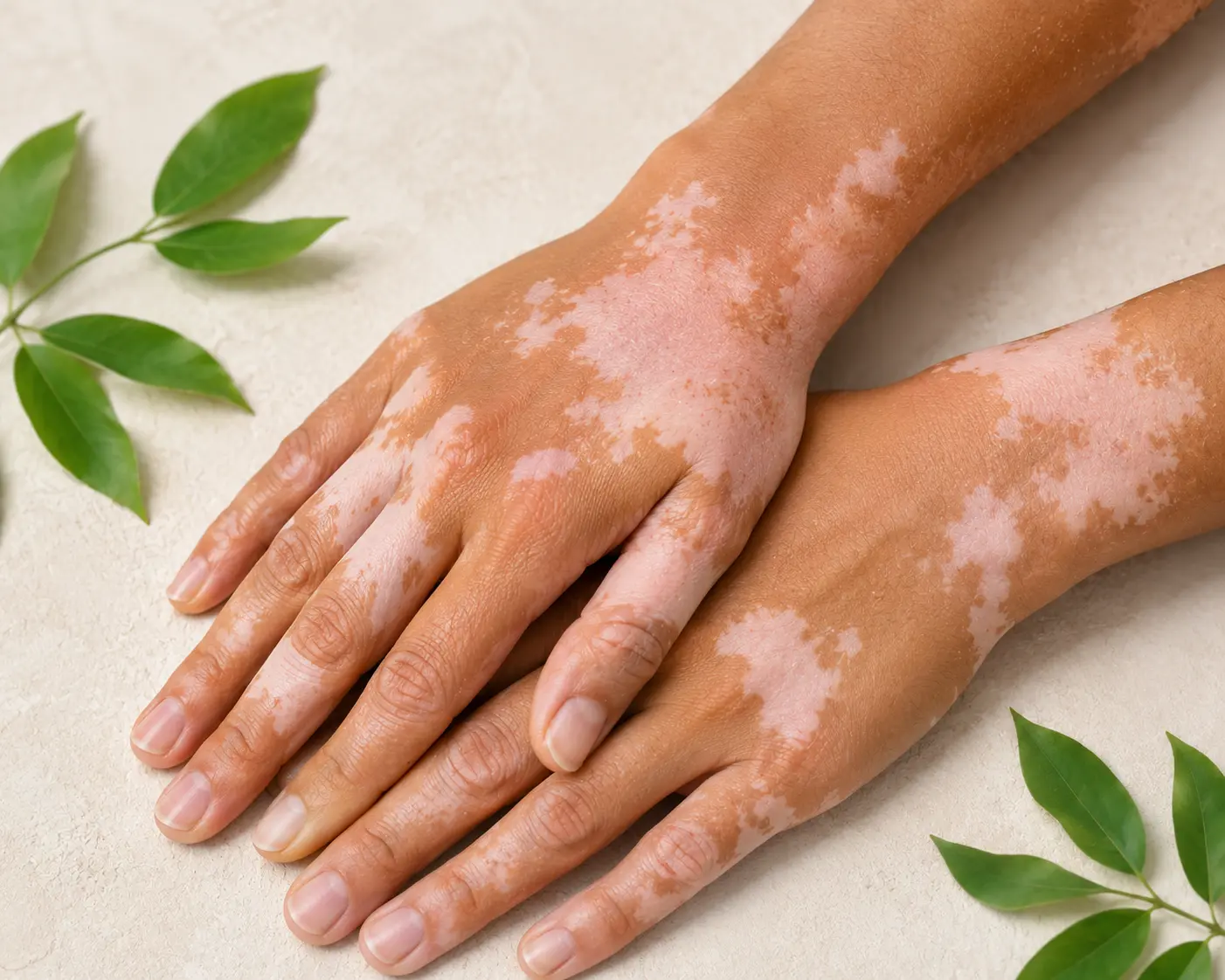
Vitiligo is a chronic skin pigmentation disorder in which the immune system mistakenly attacks and destroys melanocytes — the cells responsible for producing melanin, the pigment that gives skin, hair, and eyes their colour. When melanocytes are damaged or stop functioning, the affected areas lose their natural colour, resulting in smooth, well-defined white patches on skin, medically referred to as depigmentation.
Vitiligo is classified into two broad types:
Segmental vitiligo — usually appears early in life, affects one side of the body in a localized pattern, and tends to stabilize relatively quickly. It generally does not cross the body’s midline.
Non-segmental (generalized) vitiligo — the more common form, typically appears symmetrically on both sides of the body and can progress unpredictably over time, sometimes spreading to new areas.
This distinction matters clinically because segmental vitiligo, once stable, often responds particularly well to surgical approaches like skin grafting, while non-segmental vitiligo is usually managed with a combination of medical therapies. This is one of the first things a vitiligo specialist will assess during your vitiligo diagnosis.
What Causes Vitiligo?
There is no single, isolated cause of vitiligo. Current dermatological understanding describes it as a complex autoimmune disorder, where the body’s own immune system attacks healthy pigment-producing cells. Several contributing factors have been identified:
Genetic predisposition — having a close blood relative with vitiligo increases the risk, although most people with a family history never develop the condition themselves.
Autoimmune association — vitiligo is sometimes linked with other autoimmune conditions, such as thyroid disorders.
Environmental and physical triggers — skin trauma, sunburn, or significant stress have been reported to trigger or worsen patches in some individuals.
Drug-induced vitiligo — certain medications, including some cancer immunotherapies, have been associated with vitiligo-like depigmentation as a side effect.
Importantly, vitiligo is not caused by poor hygiene, diet alone, or “impure blood,” as some traditional beliefs suggest. Understanding the real vitiligo causes helps patients move past guilt or blame and focus on constructive, medically sound vitiligo management.
Early Signs of Vitiligo: What to Watch For
Recognizing the early signs of vitiligo can lead to timely intervention, which generally supports better treatment outcomes. Common early indicators include:
Small, flat, milky-white or pale patches that are more noticeable than the surrounding skin
Patches that may initially be subtle and become clearer under sunlight or specialized lighting
Premature whitening or greying of scalp hair, eyelashes, eyebrows, or beard
Loss of colour inside the mouth or nose in some cases
Patches commonly starting around the hands, face, areas around body openings, or skin folds, though they can appear anywhere
If you notice any of these changes, consulting a dermatologist in Perinthalmanna promptly — rather than waiting to “see if it goes away” — gives you the best chance of catching the condition while it’s still limited and potentially more responsive to treatment.
Myth vs Fact: Debunking Common Vitiligo Beliefs
Myth 1: “Vitiligo Is Contagious”
Fact: Vitiligo cannot be transmitted through touch, sharing clothes, utensils, or any form of physical contact. It is an autoimmune skin disease originating from the person’s own immune system, not an infection. This is one of the most damaging vitiligo myths, as it has historically led to unnecessary social stigma. Sharing accurate vitiligo facts with family, friends, and communities is an important part of patient support.
Myth 2: “Vitiligo Is Only a Cosmetic Problem”
Fact: While vitiligo does not cause physical pain or directly threaten general health, it is a recognized medical condition, not merely an appearance issue. The unpredictable nature of the skin pigmentation disorder, combined with its visibility, often has a real psychological impact — including anxiety, lowered self-confidence, and social withdrawal. Because of this, proper vitiligo care should address both the skin and the emotional wellbeing of the patient.
Myth 3: “There’s No Point Treating Vitiligo Because It Can’t Be Cured”
Fact: This myth causes many patients to delay or avoid treatment altogether — often to their disadvantage. Here is the honest, dermatologically accurate answer: vitiligo currently has no single, universal cure that restores pigment permanently and prevents any future changes in every patient. However, this does not mean treatment is futile. On the contrary, a substantial number of patients achieve meaningful pigmentation restoration with the right, personalized approach. Treatment can also help slow or stop the spread of new patches in many cases.
Available treatment options that dermatologists may use, depending on the patient’s vitiligo type, extent, and stability, include:
Topical medications — corticosteroid creams and topical calcineurin inhibitors, which can help repigment localized patches, especially on the face and neck
Phototherapy — narrow-band UVB light therapy is considered one of the more evidence-supported treatments, often used over an extended course of sessions
Excimer laser — a targeted form of light therapy effective for smaller, localized patches
Oral treatments — used selectively in specific cases under medical supervision
Skin grafting for vitiligo — a surgical option generally reserved for stable, long-standing patches, particularly in segmental vitiligo, that haven’t responded to other therapies
Camouflage therapy — makeup, self-tanning products, or medical-grade skin dyes that can conceal patches cosmetically while other treatments take effect, or as a standalone option for patients who prefer non-invasive management
Depigmentation therapy — in rare, extensive cases where patches cover most of the body, some patients choose to depigment the remaining normal skin to achieve a more uniform appearance; this is a significant decision made only after thorough consultation
No single treatment guarantees identical results for every patient. Response varies based on skin type, disease duration, patch location, and how the individual’s body responds — which is precisely why a personalized treatment plan, built around a proper diagnosis, matters so much when searching for the best vitiligo treatment in Perinthalmanna.
Myth 4: “Turmeric, Copper Water, or Other Home Remedies Can Cure Vitiligo”
Fact: There is no credible scientific evidence that home remedies, herbal pastes, or specific “detox” diets can repigment vitiligo patches. Some unverified remedies can even irritate the skin or delay a patient from seeking effective medical care. A balanced diet and good general skin health support the body, but they are not a replacement for treatment recommended by a qualified skin doctor. If you’re considering a home remedy, it’s worth discussing it with your dermatologist first.
Myth 5: “White Patches from Vitiligo Never Change or Improve”
Fact: Can white patches disappear? In many cases, yes — partially or, less commonly, completely — with sustained, appropriate treatment. Repigmentation often begins as small dots of colour within or around the patch (following hair follicle patterns) that gradually expand and merge. That said, results vary: some patients see significant improvement, others see partial repigmentation, and a smaller group may see limited response. Setting realistic expectations from the start, rather than expecting uniform results, leads to a healthier treatment experience.
Myth 6: “Only Certain Skin Tones or Age Groups Get Vitiligo”
Fact: Vitiligo affects people of all skin tones, ethnicities, and age groups worldwide. It may simply be more visually apparent on darker skin tones due to greater contrast, which can create a false impression that it’s more common in certain populations. It’s also worth noting:
Can children develop vitiligo? Yes. Vitiligo can appear in childhood, and early-onset cases are sometimes associated with a more extensive or progressive course, making early paediatric dermatology evaluation particularly valuable.
Myth 7: “Vitiligo Treatment Works Immediately”
Fact: Repigmentation is a gradual biological process. Most treatments, particularly phototherapy and topical options, require consistent use over several months before visible changes appear. Patients often feel discouraged early on, but stopping prematurely is one of the most common reasons treatment doesn’t reach its full potential. Patience, combined with realistic monitoring by your specialist, is part of effective vitiligo management.
Is Vitiligo Curable? The Honest Answer
To directly answer the question in this blog’s title: vitiligo is not universally “curable” in the sense of a guaranteed, permanent, one-time fix — but it is manageable, and many patients achieve significant improvement in skin appearance with the right treatment plan. Outcomes depend on several individual factors, including:
Type of vitiligo (segmental vs non-segmental)
How long the patches have been present
Location and size of the affected areas
Skin type and overall health
How early treatment begins
Consistency in following the treatment plan
Reputable global dermatology bodies are clear that treatment aims to restore pigment and manage the condition rather than promise a universal cure — and that no single treatment works identically for everyone. Any clinic or product claiming a 100%, permanent, one-size-fits-all cure for vitiligo should be approached with caution. Genuine vitiligo treatment is a structured, monitored, and often gradual process.
Can Vitiligo Spread? When Should You See a Dermatologist?
Can vitiligo spread? Yes, particularly non-segmental vitiligo, which can extend to new areas over time if left unmanaged. This is one of the strongest reasons not to delay seeking care.
Is vitiligo contagious? No — this bears repeating, as it remains one of the most persistent misconceptions. It cannot spread from person to person.
When should I see a dermatologist? As soon as you notice unexplained white or light patches on your skin, changes in hair colour in specific areas, or if existing patches appear to be enlarging. Early consultation with a vitiligo specialist allows for accurate diagnosis (ruling out other causes of skin discolouration, such as fungal infections or post-inflammatory changes) and gives treatment the best chance of success.
Finding the Best Vitiligo Treatment in Perinthalmanna: Which Option Works Best For You?
There is no universal “best” treatment for every patient — the right approach depends on individual diagnosis. However, dermatologists generally consider factors like patch stability, size, and location when recommending options such as phototherapy, topical medications, excimer laser, or surgical approaches like skin grafting. This is why patients researching the best vitiligo treatment in Perinthalmanna are encouraged to prioritize a proper in-person evaluation over generic advice found online.
At NeoSkin Speciality Centre, , our approach to vitiligo care includes:
A thorough clinical evaluation and vitiligo-type classification
Diagnostic tools, including Wood’s lamp examination, to confirm diagnosis and rule out other pigmentation disorders
A personalized treatment plan combining appropriate therapies based on your specific presentation
Ongoing monitoring and adjustments as treatment progresses
Guidance on sun protection and skin health to support overall treatment outcomes
A supportive, judgment-free environment to help patients manage both the physical and emotional aspects of vitiligo
We do not promise guaranteed or universal cures, because no responsible dermatology practice can make that claim. What we do offer is an honest assessment, an evidence-based plan, and consistent care throughout your treatment journey.
Take the Next Step Toward Informed Vitiligo Care
Vitiligo can feel overwhelming, especially with so much conflicting information available. But with an accurate diagnosis, realistic expectations, and a personalized treatment plan from an experienced skin specialist, most patients can achieve real, visible improvement in their skin’s appearance and, just as importantly, in their confidence.
If you’re looking for the best vitiligo treatment in Perinthalmanna, the team at NeoSkin Speciality Centre is here to provide an honest evaluation and a care plan built around your specific needs — not one-size-fits-all promises.
Book a consultation with our dermatology team at NeoSkin Speciality Centre, Perinthalmanna, today.
References and Further Reading
This blog draws on publicly available patient education material from the following trusted medical sources:
American Academy of Dermatology (AAD) — Vitiligo overview, causes, diagnosis, and treatment
Mayo Clinic — Vitiligo symptoms, causes, and treatment overview
National Institute of Arthritis and Musculoskeletal and Skin Diseases (NIAMS) — Vitiligo health topic
MedlinePlus (U.S. National Library of Medicine) — Vitiligo treatment overview
British Association of Dermatologists — Vitiligo patient information
This blog is for general educational purposes and does not replace individual medical advice. Please consult a qualified dermatologist for diagnosis and treatment tailored to your condition.